

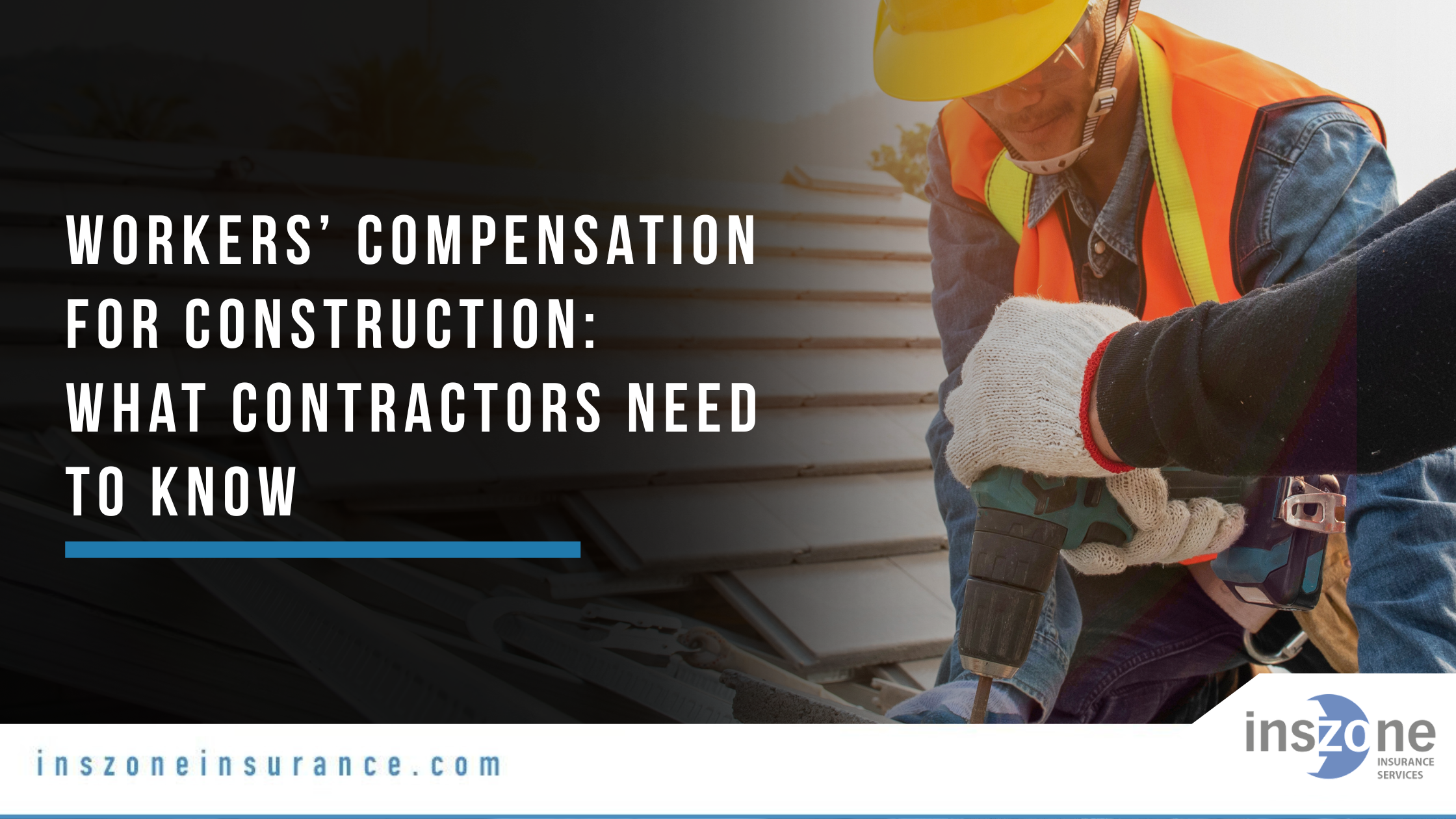
The construction industry is built on hard work, tight deadlines, and heavy machinery. But with high physical demands comes an inherently higher risk of injury. Whether you run a local roofing crew, a specialized framing business, or a large general contracting firm, workplace accidents are a reality of the trade.
When a crew member gets hurt on a job site, Workers’ Compensation Insurance is the critical safety net that protects both your employee’s livelihood and your company’s financial survival.
If you are a contractor, here is everything you need to know about how workers’ comp functions in the construction industry, what it covers, and how to manage your costs.
Why Construction Businesses Need Workers’ Comp
In almost every state, carrying workers’ compensation insurance is a strict legal requirement the moment you hire your first employee. Operating without it can result in crippling fines, stop-work orders, and even criminal charges.
Beyond legal compliance, workers’ comp protects your business from catastrophic out-of-pocket costs. A single fall from a ladder or a severe machinery accident can result in hundreds of thousands of dollars in medical bills and legal fees. Without insurance, your business is directly liable for those costs.
What Does Workers’ Compensation Cover?
If an employee suffers a work-related injury or illness (such as a scaffolding fall, a repetitive motion injury, or respiratory issues from inhaling site dust), workers’ comp provides several key benefits:
-
Medical Expenses:
Covers the cost of emergency room visits, surgeries, medications, and physical rehabilitation.
-
Lost Wages:
Replaces a portion of the employee’s income while they are recovering and unable to work.
-
Disability Benefits:
Provides financial support if the injury results in a temporary or permanent disability.
-
Death Benefits:
In the tragic event of a fatal job site accident, it helps cover funeral expenses and provides financial support to the employee’s dependents.
-
Employer Liability:
Protects your business from being sued by the injured employee for negligence related to the injury.
The Subcontractor Trap: Who Are You Responsible For?
One of the most common and costly mistakes general contractors make is assuming they are not responsible for 1099 independent contractors or subcontractors.
If you hire a subcontractor who does not carry their own active workers’ compensation policy, your state’s labor board or your insurance carrier will likely classify them as your employee in the event of an accident. This means if an uninsured sub gets hurt on your site, your policy will have to pay the claim. Furthermore, during your annual insurance audit, your carrier will charge you additional premiums for any uninsured subcontractors you used during the year.
The Fix: Always collect and verify Certificates of Insurance (COIs) from every subcontractor before they step foot on your job site.
How Are Construction Workers’ Comp Rates Calculated?
Because construction is high-risk, premiums are naturally higher than in office-based industries. Your rate is calculated using three main factors:
- Class Codes: Your employees are categorized based on their specific daily tasks. (e.g., A roofer’s class code will carry a much higher rate than an interior painter’s code).
- Total Payroll: Your premium is directly tied to the size of your payroll.
- Experience Modification Rate (X-Mod or EMR): This is your company’s “safety credit score.” It compares your historical claims data against the industry average. An EMR of 1.0 is average. If you have a history of frequent accidents, your EMR goes up (increasing your premium). If you have a stellar safety record, your EMR drops below 1.0 (earning you a discount).
If you are in California, read the state insurance mandates for contractors
How to Lower Your Workers’ Comp Costs
You cannot change your industry’s base rates, but you can control your safety culture. Here is how top contractors keep their premiums low:
-
Implement a Safety Program:
Regular toolbox talks, mandatory PPE, and documented safety training reduce the frequency of accidents.
-
Create a Return-to-Work Program:
Bringing an injured worker back on “light duty” (such as doing office work or inventory) as soon as medically cleared reduces the amount of lost wages the insurance company has to pay out, which protects your EMR.
-
Report Claims Immediately:
Delayed reporting often leads to more expensive claims and potential litigation. Report incidents to your carrier on day one.
Learn: how inflation impacts workers’ compensation rates
Protect Your Crew and Your Bottom Line
Navigating class codes, state regulations, and subcontractor liabilities can be complicated, but you don’t have to do it alone. At Inszone Insurance, our dedicated commercial brokers specialize in the construction industry. We partner with top-tier carriers to find you the most competitive rates and the exact coverage your operation needs to stay compliant and protected.
Don’t let a job site accident derail your business. Contact Inszone Insurance today for a free, customized workers’ compensation quote.