

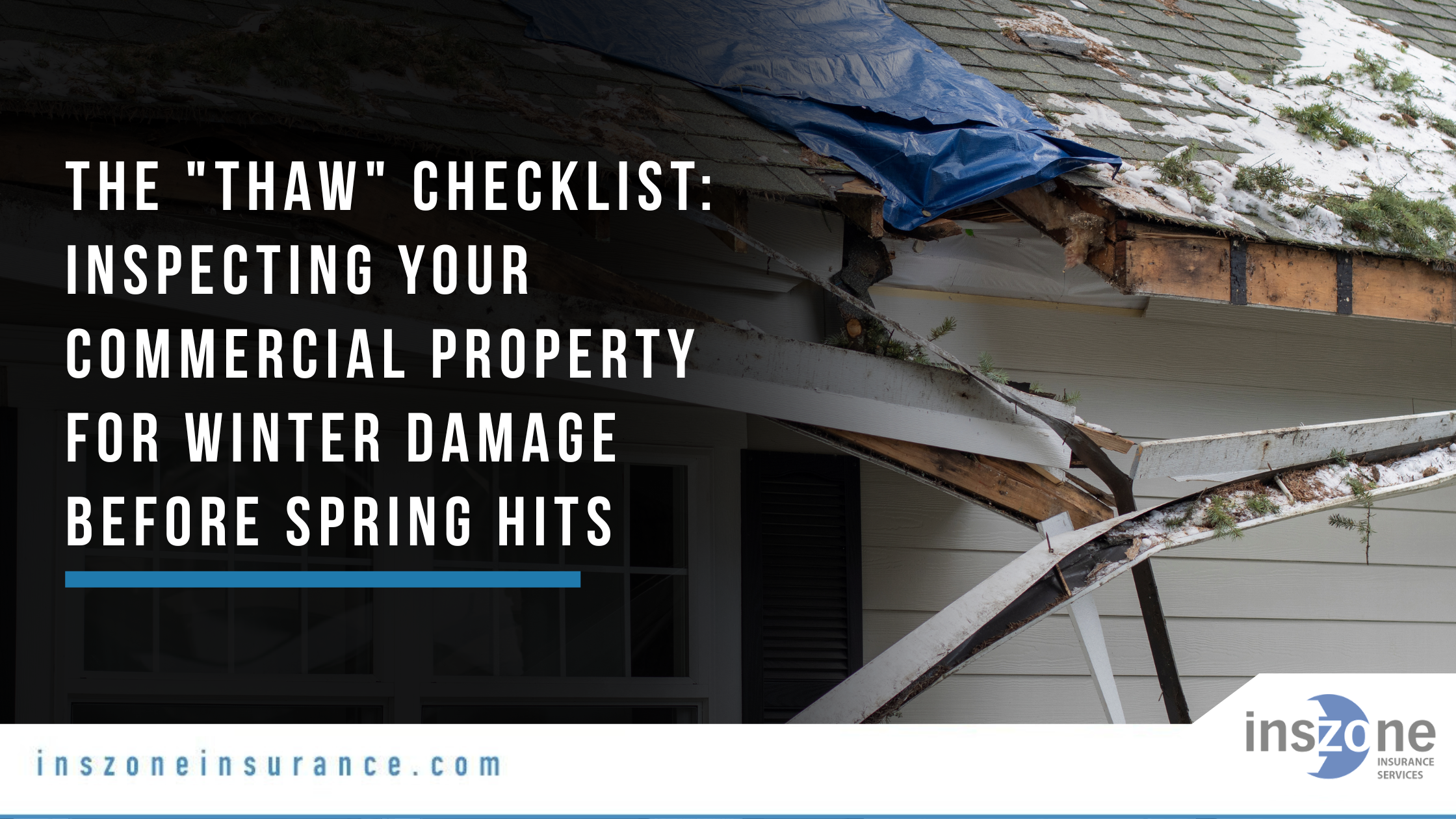
For contractors and commercial building owners, winter is a season of endurance. Freezing temperatures, heavy snow loads, and constant moisture put immense stress on physical assets. However, the true extent of winter wear and tear often remains hidden until the ice begins to melt.
As the spring construction season approaches, the “thaw” presents a critical window for risk management. Proactively identifying and addressing winter damage before operations ramp up can prevent minor issues from turning into expensive, operational-halting claims.
Here is your essential “Thaw” Checklist to ensure your property and equipment are ready for a profitable spring.
Read: commercial property insurance basics
-
The Roof and Exterior: Guarding Against the Melt
The freeze-thaw cycle is notoriously destructive to commercial roofing. As snow melts during the day and refreezes at night, ice dams can form, forcing water under roofing materials and into the building envelope.
What to inspect
Have a qualified professional clear debris from gutters and downspouts to ensure proper drainage. Look for displaced flashing, pooling water, or interior water stains that indicate a compromised roof.
The Insurance Connection
Water damage from a leaking roof is a leading cause of Commercial Property claims. Regular maintenance documentation can be crucial if a severe spring storm forces you to file a claim later in the season.
-
Plumbing and HVAC: Catching the Silent Leaks
Cold snaps can wreak havoc on internal systems, especially in unoccupied units or poorly insulated warehouses. A pipe that cracked in January may not reveal itself until the water thaws and begins to flow in March.
What to inspect
Carefully examine exposed pipes in crawlspaces, basements, and exterior walls for bulging or hairline fractures. Run HVAC systems through a test cycle to ensure coils and compressors survived the freeze.
The Insurance Connection
Ensure your Commercial Property policy is up to date regarding water damage limits and that you are meeting any carrier requirements for maintaining building heat during winter months.
-
Fleets and Heavy Equipment: Prepping for the Job Site
For construction firms, your heavy machinery is the lifeblood of your business. Equipment that has been sitting idle in cold staging areas is highly susceptible to winter degradation.
What to inspect
Check hydraulic lines for cracking, test batteries that may have lost their charge in the cold, and inspect undercarriages for rust caused by road salt and moisture.
The Insurance Connection
Standard auto or property policies do not cover bulldozers, excavators, or tools moving between job sites. This is where Inland Marine (often called Contractor’s Equipment) coverage is vital. Spring is the perfect time to review your equipment schedule. Did you buy new tools at the end of last year? Did you sell an old backhoe? Updating your Inland Marine schedule ensures you are only paying for what you own and that your new investments are fully protected.
Learn: Preparing your commercial property for wet weather liability
Partnering for a Secure Spring
The transition into spring should be focused on securing new bids and growing your business, not scrambling to fix unmitigated winter damage.
At Inszone Insurance Services, we specialize in partnering with commercial property owners and construction professionals to build robust, customized insurance programs. Don’t wait until the busy season is in full swing.
Contact an Inszone Insurance Specialist today to review your Commercial Property and Inland Marine policies and ensure your business is fully protected for the year ahead.