

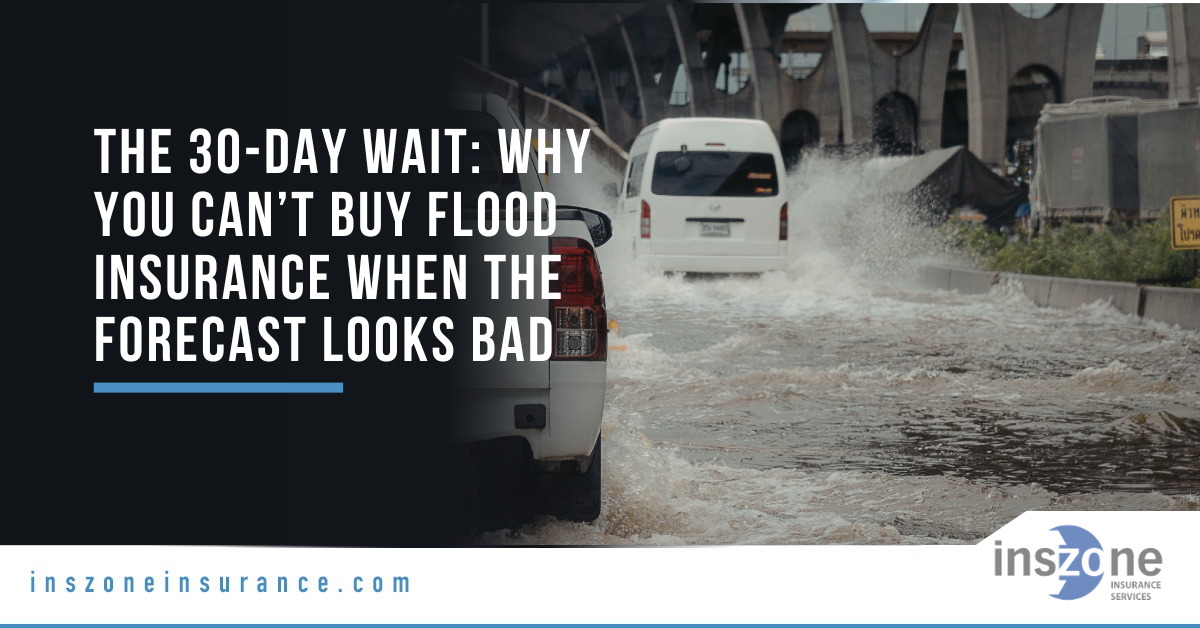
California is no stranger to unpredictable weather. Over the last few years, late winter and early spring have brought massive “atmospheric rivers” to the West Coast, dropping record-breaking rainfall in a matter of days. When the local news starts showing ominous radar maps and issuing flash flood warnings, the first instinct for many homeowners and business owners is to call their insurance broker to buy flood insurance.
Unfortunately, by the time the storm is on the radar, it is already too late.
Previously, we have discussed all about the essentials regarding flood insurance, and what you need to know before purchasing flood insurance coverage. However, if you want to protect your property this spring with a comprehensive flood coverage, here is what you need to know about the rules of flood insurance and why you cannot afford to wait for a bad forecast.
The Mandatory 30-Day Waiting Period
Unlike standard auto or home insurance policies that can often be bound and activated within a day, flood insurance operates under a different set of rules.
If you purchase a policy through the National Flood Insurance Program (NFIP)—which provides the vast majority of flood coverage in the United States—there is a strict, mandatory 30-day waiting period from the time you pay your premium until the policy actually takes effect.
Why does this exist? The rule is in place to prevent “adverse selection.” It stops people from only buying flood insurance when a storm is 48 hours away and then canceling it immediately afterward. Insurance relies on a shared pool of risk, and the 30-day wait ensures that property owners maintain their coverage proactively.
If you buy a policy on February 15th, you will not be protected until March 17th. If an atmospheric river floods your neighborhood on March 10th, your claim will be denied.
“But I Don’t Live in a Flood Zone”
This is the most common—and dangerous—misconception among property owners. Many people assume that because they don’t live right on the coast or next to a major river, they are perfectly safe.
However, flood exposure can exist even when owners aren’t aware of nearby creeks or drainage systems. FEMA assigns flood zones across the country, including “AO zones” which represent areas with low-to-moderate risk. During an intense atmospheric river, heavy rain can quickly overwhelm city drains and cause water to rise into parking areas, streets, and lower-level units.
In fact, historically, more than 20% of all flood claims come from properties situated strictly outside of high-risk flood zones.
Learn: The ultimate guide to hurricane-prone states
The Hard Truth About Your Homeowners Policy
It is vital to understand that a standard Homeowners, Renters, or Commercial Property insurance policy explicitly excludes damage caused by rising groundwater.
If a pipe bursts inside your walls, your standard policy covers it. But if a torrential downpour floods your street and water pushes under your front door, ruining your hardwood floors and drywall, you have zero coverage unless you hold a dedicated flood insurance policy.
Learn: how to survive a flood?
Act Now Before the March Rains
If you want your home or business protected from the heavy rains that typically hit California in March and April, February is your deadline to act. Don’t wait until the sandbags are being handed out in your neighborhood.
Contact the personal and commercial flood insurance specialists at Inszone Insurance today. We can help you identify your property’s true flood risk, explain your NFIP and private market options, and get your 30-day clock started before the next atmospheric river arrives.